Author: Editoral Team

  • Government appeals currency redesign

    Government appeals currency redesign

    An effort to force a redesign of the nation’s currency so paper money could be more easily used by the blind would be too expensive and could cause undue hardships on the vending machine industry, the Bush administration says.  

    The administration asked an appeals court on Tuesday to overturn a ruling that could require the introduction of such features as Braille lettering, micro-perforations or varying the sizes of denominations to aid the blind and visually impaired.

    Justice Department attorneys representing Treasury Secretary Henry Paulson filed the appeal with the U.S. Court of Appeals for the District of Columbia Circuit, asking that a Nov. 28 decision by U.S. District Judge James Robertson be overturned.

    Robertson ruled that the nation’s currency as currently designed violates the Rehabilitation Act, a law that prohibits discrimination in government programs on the basis of disability.

    Robertson ordered Treasury to come up with ways for the blind to recognize the different denominations of paper currency, finding in favor of a lawsuit brought by the American Council for the Blind, which has waged a four-year court battle over the issue.

    In his ruling, Robertson had said the United States was the only nation out of 180 issuing paper currency that printed bills that were identical in size and color in all their denominations.

    He cited the successful use of such features as varying sizes, raised lettering and tiny perforations used by other nations as evidence such changes were feasible.

    But in their petition to the appeals court, government lawyers argued that varying the size of denominations could cause significant burdens on the vending machine industry and cost the Bureau of Engraving and Printing an initial investment of $178 million and $37 million to $50 million in new printing plates.

    “Even placing these figures in the context of the $420 million the BEP has spent annually on average in producing currency over the last 10 years, the additional costs proposed to modify the currency are not easily dismissed,” the government argued in its petition to the appeals court.

    The government lawyers also argued that blind people were not being denied “meaningful access” to currency transactions because there were portable readers that could identify denominations and they also could use credit cards for transactions rather than cash.

    Jeffrey Lovitky, an attorney for the American Council of the Blind, said he would ask the appeals court to reject the government’s arguments and allow the case to go forward with a January hearing where the government is scheduled to provide testimony to aid Robertson in deciding what remedies should be adopted.

    Christopher Gray, president of the council, said that while his group has been lobbying for changes to help the blind since 1995, the government has yet to conduct any feasibility studies of what those changes might cost and has instead moved ahead with a number of design changes to thwart counterfeiters.

    “We would be happy to wait until the next change in the bills and build accessibility at that time,” Gray said. “Surely, if you did it that way, the costs can’t be anything like what is being claimed by Treasury.”

    Tara Cortes, president of Lighthouse International, another advocacy group for the blind, said the government’s decision to fight making changes in the currency could end up being harmful to millions of Americans.

    There are 1.3 million people in the United States currently who are legally blind, but it is estimated that number will double by 2030 and millions more will have vision problems as the baby boom generation ages and more people fall victim to macular degeneration and other diseases, such as diabetes, that can affect vision.

    “While the government may argue that changing the dollar bill will cost billions, it will pale in comparison to the costs of the vision loss epidemic,” Cortes said.


    Other Vending Machine Applications
  • DVD Vending Machine

    DVD Vending Machine

    The big red vending machine at the McDonald’s whirrs and hums and spits out rental DVDs of Chicken Little and King Kong.

    Machines run by McDonald’s Corp. subsidiary Redbox Automated Retail have popped up in hundreds of Golden Arches restaurants in six cities in an experiment to see whether they drive more customers into the stores. Rental chain Movie Gallery is experimenting with DVD rental machines, too, saying the machines will make rental transactions easier for customers and make its stores more efficient.

    The spread of DVD rental machines comes as rental stores are struggling under a business model that hasn’t changed much from the mom-and-pop video stores of 20 years ago. The rental business has suffered from the sale of inexpensive DVDs, rent-by-mail services, such as Netflix Inc., and expanding video-on-demand from cable companies.

    “We think it’s a tremendous opportunity,” said Greg Waring, Redbox’s vice president of marketing. “We think we’re providing a new model for the industry that is going to be difficult for the traditional retailers to compete against.”

    About the size of a soda machine, each “Redbox” holds 500 disks and includes a touch screen so customers can pick a movie, and a credit card reader for paying the $1-per-night fee. Customers return the movies at the machine.

    Signs near the machines promote its movies. Redbox staffers load newly released DVDs each Tuesday.

    Redbox workers at the headquarters in Oakbrook Terrace, Ill., can monitor which titles are renting the most in each machine and adjust their selection accordingly. Generally there are 50 to 60 individual titles.

    Chris Kliner and his daughters Olivia, 5, and Annaliese, 4, select a rental DVD from a Redbox before eating at McDonald’s in Apple Valley, Minn. The Kliners, who were visiting from Kenosha, Wis., said they appreciated the convenience of not having to sign up just to rent a single movie.

    This summer, the company plans to let customers go online to check title availability in a particular location and rent a movie on the spot for pickup at that machine later.

    In Apple Valley, a suburb of the Twin Cities, Chris and Teresa Kliner stopped at a McDonald’s for both a meal and a copy of “Chicken Little” for their daughters to watch during a visit with relatives in the Twin Cities.

    “With kids, it’s easier this way, because they’re not running all over the store,” Teresa Kliner said while daughters Olivia and Annaliese played on the slides at the restaurant’s indoor playground.

    Jeff Smith, a McDonald’s franchisee who owns seven restaurants and runs a cooperative that buys advertising for Twin Cities McDonald’s, said he doesn’t know whether the DVD machines are bringing in more customers because there are so many other variables, like the weather and promotions, affect whether people eat out.

    But he says his customers love the machines.

    “The only thing I invest is my space,” Smith said. “We don’t get paid anything, and it doesn’t cost us anything to have it.”


    Other Vending Machine Applications

  • Sony Vending Machine

    Sony Vending Machine

    Sony is unveiling an automated kiosk that dispenses digital cameras, DVDs and MP3 players the same way a vending machine rolls out a can of soda — quickly and at all hours of the day. Sony has set up an automated kiosk for a test run at Santa Rosa Plaza that will carry about 50 Sony products, from a pack of batteries for about $5 to a PlayStation Portable for $249.

    The electronics-maker hopes the Sony Vending Machine will make it easier for consumers to pick up its products.

    In addition to Santa Rosa, it has set up similar kiosks at the Mall of Georgia in Atlanta and the Flatirons Mall in Boulder, Colo. , with plans for seven more in airports, malls and grocery stores this summer.

    “The timing is absolutely right,” said Joe Stinziano, senior vice president of Sony Electronics. “Consumers more than ever before are starting to get comfortable with the self-shopping idea. When you come across a machine like this, you can learn more about the products you want. Within three clicks and two minutes and a swipe of your credit card, you’re in and out and done. You don’t have to worry about waiting for a sales clerk or if it’s in stock.”

    After a customer selects a Sony product on a touch screen and pays for it with a credit card, a robotic arm in the kiosk pick up the product and delivers it. Sensors ensure the item reaches the shopper before the credit card is charged. The machine also includes security features to prevent would-be thieves from breaking into it.

    The kiosks will also be designed in Sony’s signature style and carry the Sony brand. A 20-inch LCD display will run Sony promotions, such as trailers for Sony movies.


    Other Vending Machine Applications

  • Ninja Vending Machine

    Ninja Vending Machine

    On a narrow Tokyo street, near a beef bowl restaurant and a pachinko parlor, Aya Tsukioka demonstrated Ninja Vending Machine that she hopes will ease Japan’s growing fears of crime.

    Ms. Tsukioka, a 29-year-old experimental fashion designer, lifted a flap on her skirt to reveal a large sheet of cloth printed in bright red with a soft drink logo partly visible. By holding the sheet open and stepping to the side of the road, she showed how a woman walking alone could elude pursuers — by disguising herself as a vending machine.

    These elaborate defenses are coming at a time when crime rates are actually declining in Japan. But the Japanese, sensitive to the slightest signs of social fraying, say they feel growing anxiety about safety, fanned by sensationalist news media. Instead of pepper spray, though, they are devising a variety of novel solutions reflecting a peculiarly Japanese sensibility.

    While Americans want to protect themselves from criminals, or even strike back, the creators say many Japanese favor camouflage and deception, reflecting a culture that abhors self-assertion, even in self-defense.

    It is just easier for Japanese to hide as making a scene would be too embarrassing.

    Ms. Tsuioka

    Ms. Tsuioka said her Ninja vending machine disguise was inspired by a trick used by the ancient ninja, who cloaked themselves in black blankets at night.

    “Japanese society won’t just laugh, so inventors are not afraid to try new things,” said Takumi Hirai, chairman of Japan’s largest association of individual inventors, the 10,000-member Hatsumeigakkai.

    Mr. Kawakami said that while some of Japan’s anticrime devices might not seem practical, they were valuable because they might lead to even better ideas.

    “Even useless things can be useful,” he said. “The weird logic of these inventions helps us see the world in fresh ways.”

    Ms. Tsukioka said she chose the vending-machine motif because the machines are so common on Japan’s streets.

    Ms. Tsukioka said her disguises could be a bit impractical, “especially when your hands are shaking.” Still, she said she hoped the designs or some variation of them could be marketed widely. So far, she said, she has sold about 20 vending-machine skirts, printing and sewing each by hand.

    She said she had never heard of a skirt’s actually preventing a crime. But on a recent afternoon in Tokyo, bystanders stared as she unfolded the sheet. But once she stood behind it next to a row of actual vending machines, the image proved persuasive enough camouflage that passers-by did not seem to notice her.

    She said that while her ideas might be fanciful, Japan’s willingness to indulge the imagination was one of its cultural strengths.

    These ideas might strike foreigners as far-fetched, but in Japan, they can become reality.

    Ms. Tsukioka

    Other Vending Machine Applications
  • Lottery Ticket Vending Machine

    Lottery Ticket Vending Machine

    Like chips and soda, now you can buy lottery tickets from lottery ticket vending machine.

    The lottery began installing 500 machines statewide last week. The vending machines sell 24 games costing $1 to $10 each.

    Many will go into supermarkets, said Alice Garland, lottery deputy executive director. Some will land in convenience stores with high ticket sales to free up clerks.

    Lottery ticket vending machine is not new to state lotteries. Maryland has used them since 1998, while Virginia first installed machines in 1990.

    States try to prevent players under 18 from using the anonymity of the machines to illegally buy tickets.

    The state also “strongly recommends” that store owners place machines within sight of clerks, she said. Some states, including Maryland and Virginia, said they require stores to place the machines where workers can watch them.


    Other Vending Machine Applications

  • Computer Memory Vending Machine

    Computer Memory Vending Machine

    Since technology is becoming increasingly commoditized I guess we shouldn’t be surprised to see computer memory vending machine.

    Kingston, in conjunction with MyMemory, has unveiled the first mainstream computer memory vending machine. It is also located in about the most logical place for such a device: an airport.

    Ann Keefe, Director of Sales UK & Ireland at Kingston Technology, was understandably chipper about the whole thing: “Our consumers are telling us they want greater storage capacity for their mobile phones, digital cameras and USB drives to store music, images, games, videos and personal data,” she said.

    They want instant access to SD cards and USB drives as they need them 24/7, so vending machines in public spaces were the most obvious solution.

    Ann Keefe, Director of Sales UK & Ireland at Kingston Technology

    A memory selector will be integrated into all vending machines to give customers the confidence they are purchasing the correct memory card for their device.


    Other Vending Machine Applications

  • Anger release vending machines

    Anger release vending machines

    Now here’s an invention with a lot of potential – anger release vending machines full of plates, glasses and porcelain figurines that you can break to calm yourself down.

    If you haven’t done it yourself, I’m sure you’ve seen it in movies – breaking stuff to calm the nerves. Most housewives prefer kitchen items, like plates or glasses, but porcelain decorations work just as well. Pick them up, smash them into the floor/wall and feel yourself calm down almost instantly. It’s called destruction therapy, or destructotherapy. The only problem is you can’t really practice it wherever you are, unless you fancy carrying a bunch of plates with you wherever you go.

    Luckily, designers Ronnie Yarisal and Katja Kublitz at Yarisal & Kublitz have come up with an ingenious solution – anger release vending machines filled with whatever item you feel like smashing to calm down and release the pressure. Just like other dispensers, all you have to do is punch in the product code, pay, and there you have it – instant anger management session.

    Brilliant idea, finally someone actually starts producing these things.

    Anger Release Vending Machine

    Other Vending Machine Applications

  • Cigarette vending machine ID Card debut

    Cigarette vending machine ID Card debut

    In Japan, the legal smoking and purchasing age is 20. To prevent underage access, cigarette vending machines (known as jidōhanbaiki for tobacco) require a Taspo card (タスポ), an RFID-enabled IC card that verifies the user’s age.

    Introduced in 2008, the Taspo system is mandatory for all such machines nationwide.

    What is Taspo and how does it work?

    Taspo is the name that’s been given to the IC card (combining “tobacco,” “access” and “passport”) and is issued by the Tobacco Institute of Japan. Without this card, it will be impossible to buy cigarettes from a vending machine.

    Smokers will need to place Taspo on a card reader on the front of the Cigarette vending machine, which will access information stored in the card and verify that the purchaser is at least 20 years old — the legal smoking age.

    The card also has a prepaid electronic money function, allowing people to deposit up to ¥20,000 for cigarette purchases.

    When used as a debit card, age verification and payment will take place simultaneously.

    Why is Taspo being introduced?

    The institute’s Web site says,

    Taspo is the ultimate way of rigorously conducting age verification checks and is expected to be a highly effective way of preventing underage smoking.

    The Health, Labor and Welfare Ministry has conducted studies showing that 70 percent to 80 percent of underage smokers get their cigarettes from vending machines. By introducing taspo, the institute hopes to cut this phenomenon off.

    Are there loopholes in the new system?

    Yes. A taspo card is not required when purchasing cigarettes at a shop. Even though employees are supposed to check the age of purchasers who they suspect are minors, this doesn’t always prevent underage smoking.

    Also, a minor could sneak their parent’s card or borrow one from any legitimate card holder to use in a cigarette machine.

    We can never prevent adults from purchasing alcohol and tobacco for children, we hope cardholders behave like responsible adults.

    Hitomichi Tanaka, Institute spokesman

    Note on 2026 Changes:

    Taspo service is set to end in 2026, with machines upgrading to scan driver’s licenses or My Number cards directly. This won’t affect current use.


    Other Vending Machine Applications
  • Trainers Vending Machine, Onitsuka Tiger

    Trainers Vending Machine, Onitsuka Tiger

    It is now possible to get your kicks from the crafty trainers vending machine, created by Japanese sports fashion brand, Onitsuka Tiger.

    It will be as easy as getting hold of a chocolate bar or a can of coke, as well as being the most convenient way to ensure your feet look good at all times. The latest advance in sneaker shopping comes after months of arduous design work by the Onitsuka Tiger team. The machine can vend 24 pairs of trainers at any one time, in any of 6 sizes.

    The trainer vending machine will be stationed just off Carnaby Street for three days only at the Onitsuka Tiger store. All trainers from the vending machine will be given away – so you don’t need to put your hand in your pocket at all.

    After making a star appearance in London, the vending machine will then embark on a national tour, starting in Manchester.

    Onitsuka Tiger Trainers Vending Machine

    Penny Keen, Onitsuka Tiger Brand Manager commented: “We hope trainer fans love our latest creation as much as we do and enjoy the latest and most innovative way to buy their Tiger Feet. Onitsuka Tiger prides itself on its heritage, so taking inspiration from modern day Japanese vending machines (which vend anything from eggs to loo rolls) seemed like the perfect next step for the brand. It’s satisfying knowing that we’re the first in the world to do it and we can’t wait to take it to Onitsuka Tiger fans across the UK.”

    Some facts from Onitsuka Tiger:

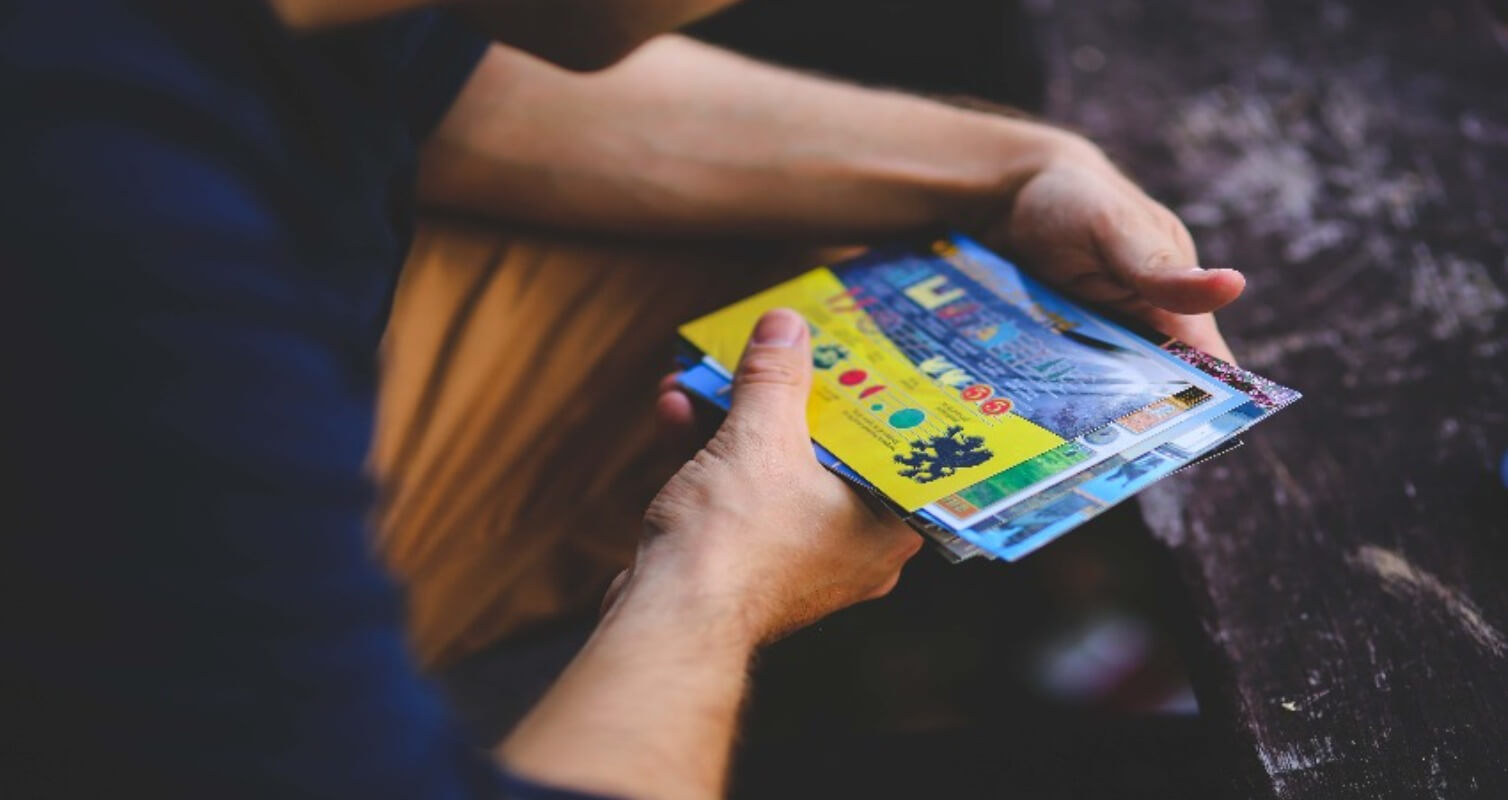
    • Each postcard entitles the winner to one token to use in the vending machine.
    • Winning postcards must be exchanged for an Onitsuka Tiger token at store counter.
    • The vending machine only vends trainers in the following sizes: UK 5 – 10.

    Store Address: Onitsuka Tiger, 15 Newburgh Street, London


    Other Vending Machine Applications

  • Methadone Vending Machines

    Methadone Vending Machines

    Fifty-seven methadone vending machines have been installed in British prisons in an effort to help opiate-addicted prisoners manage their drug addictions without resorting to illegal heroin supplies available behind bars.

    The machines dispense individualized doses of methadone to registered prisoners after a fingerprint or iris scan. A total of about 70 machines are expected to be installed at a cost of approximately $6.5 million, roughly 10% of the British prison system’s drug treatment budget.

    ‘Methadone Vending Machines are a safe and secure method for providing a prescribed treatment,’ said a prison spokesperson.

    ‘They can only be accessed by the person who has been clinically assessed as needing methadone and that person is recognized by a biometric marker, such as their iris.’


    Other Vending Machine Applications