Author: Editoral Team

  • Ice Cream Vending Machine

    Ice Cream Vending Machine

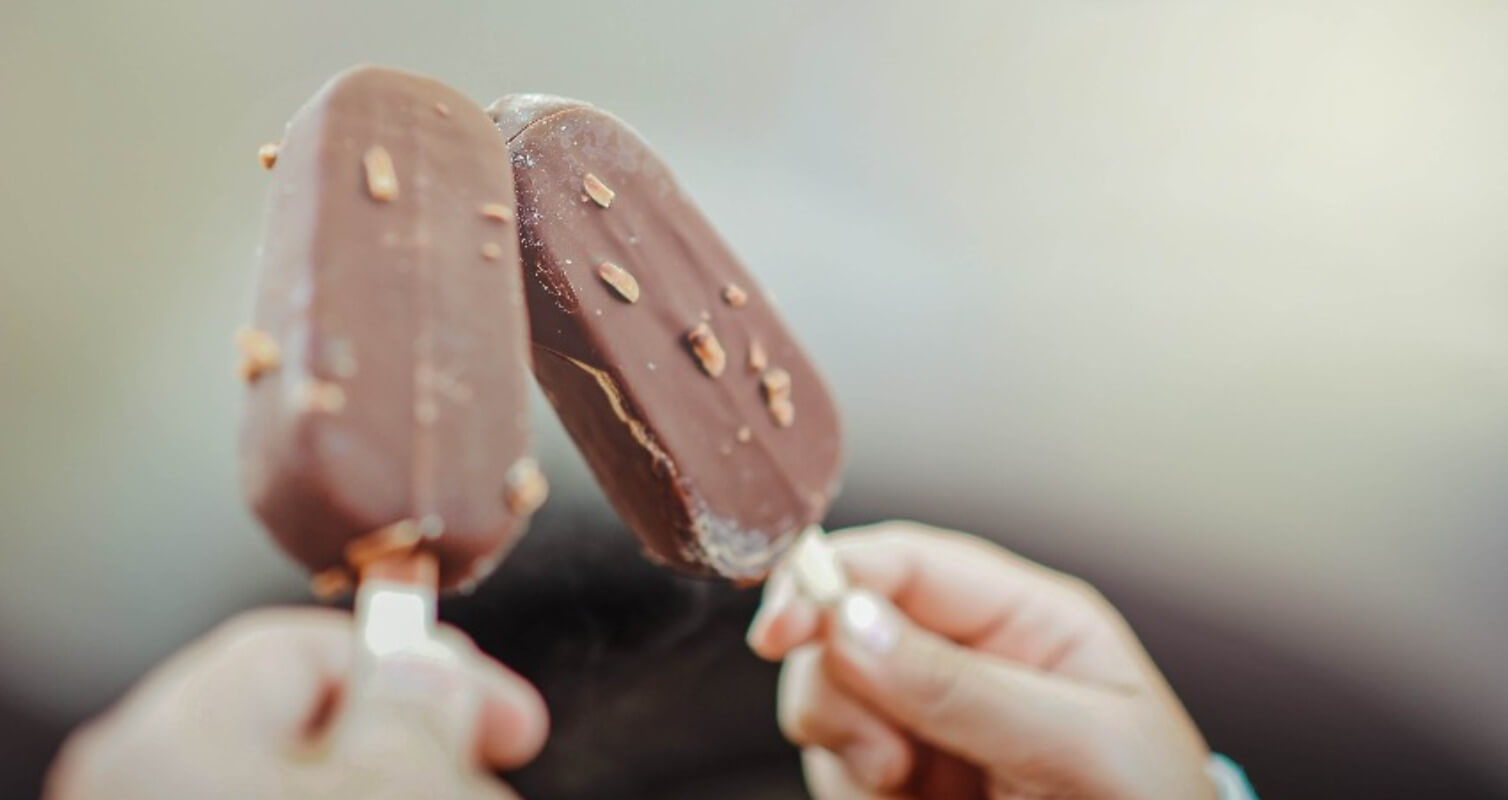
    Japan is globally renowned for its ubiquitous, high-tech vending machines—and when it comes to ice cream, the country takes frozen indulgence to a whole new level. Unlike typical soda or snack dispensers, Japan’s ice cream vending machines are refrigerated marvels that deliver creamy treats 24/7, even in remote towns, train stations, and mountain trails.

    🍦 How They Work

    These specialized vending machines are fully refrigerated (maintaining temperatures around –15°C to –20°C) and stock a rotating selection of popular Japanese ice cream brands, such as:

    • Lotte’s Koeda’s Stick (honeycomb milk chocolate)
    • Meiji’s Essel Super Cup (giant tubs with seasonal flavors)
    • Glico’s Pino (chocolate-covered vanilla bites)
    • Häagen-Dazs mini cups (luxury option, often ¥400–¥600)
    • Regional specialties like matcha soft-serve bars or yuzu sorbet

    Prices typically range from ¥100 to ¥600 (approx. $0.70–$4 USD), with payment via cash (coins/bills), IC cards (Suica, PASMO), or mobile QR codes.

    📍 Where You’ll Find Them

    • Rural roadsides and mountain passes (where shops are scarce)
    • Train station platforms (perfect for a treat before boarding)
    • Beaches and parks in summer
    • Convenience store parking lots (as overflow or after-hours options)
    • Onsen (hot spring) towns, offering a cool contrast to the heat

    Why Japan?

    Several factors make ice cream vending feasible here:

    • High public safety (vandalism/theft is rare)
    • Advanced cold-chain logistics for restocking
    • Cultural love of convenience (konbini culture extends to machines)
    • Strong domestic ice cream market with constant flavor innovation

    ❄️ Seasonal & Limited Editions

    Manufacturers often use these machines to test or promote limited-time flavors—like sakura (cherry blossom) in spring or roasted sweet potato in winter—creating a sense of novelty and urgency.

    The future:

    While cashless and smart vending is growing, the ice cream vending machine remains a beloved icon of Japanese summer—offering instant joy, no matter the hour or location.

    🍨 Fun fact: Japan has over 4 million vending machines—one for every 30 people—and about 1–2% of them sell frozen treats like ice cream.

    In a country where technology meets tradition, the ice cream vending machine is a delicious symbol of self-service serenity—one cold, creamy bite at a time.

    Ice Cream Vending Machine in Japan

    Other Vending Machine Applications

  • Vending Machine History

    Vending Machine History

    Vending Machine—a symbol of convenience and automation—has a surprisingly ancient origin, evolving over two millennia from simple mechanical dispensers to today’s smart, cashless kiosks.

    🏛️ 1st Century CE – The First Vending Machine

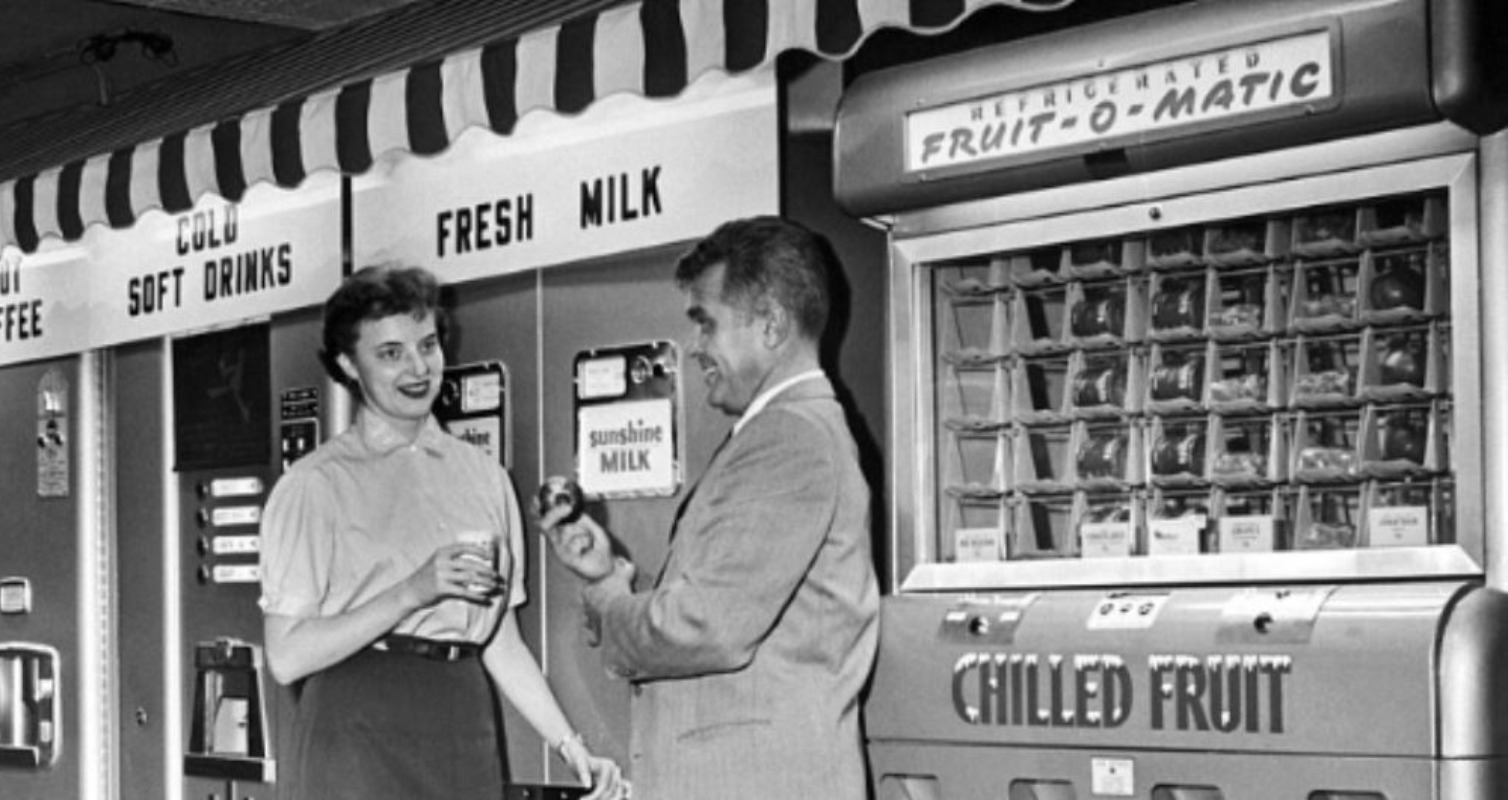
    The earliest known vending machine was invented by Hero of Alexandria, a Greek engineer in Roman Egypt, around 60 CE. It dispensed holy water in temples: when a coin was dropped into a slot, it fell onto a pan attached to a lever, opening a valve that released a fixed amount of water. After the coin slid off, the valve closed—making it a clever, faith-based transaction.

    🏭 17th–19th Century – Tobacco and Postcards

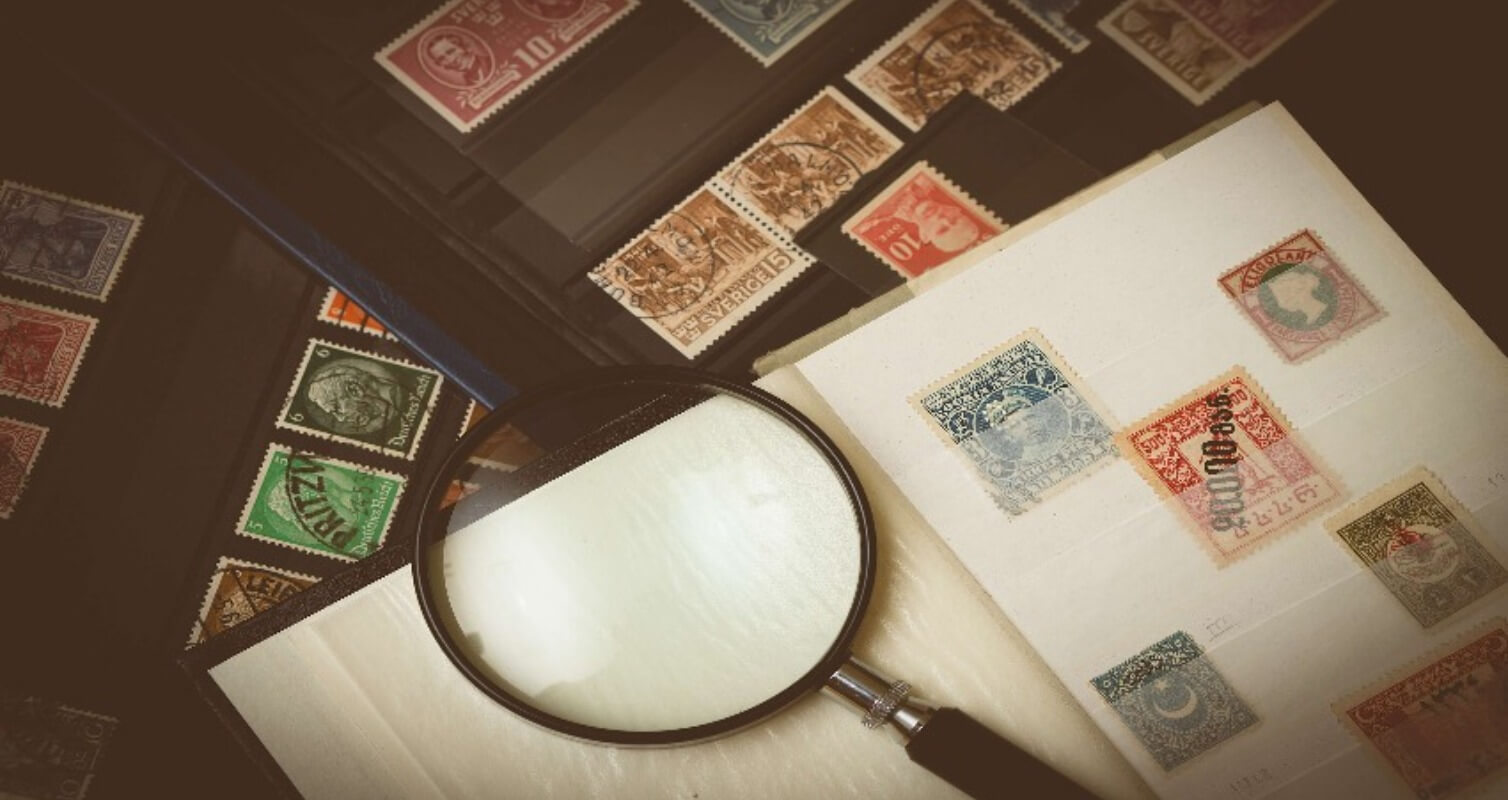
    Vending machines reappeared in England in the early 1600s, with coin-operated tobacco dispensers. But the modern era began in 1883, when Percy Everitt in London introduced a machine that sold postcards—soon followed by ones dispensing envelopes, notepaper, and stamps. These became common in railway stations, catering to the booming postal culture.

    🥤 Early 20th Century – The Rise of Snacks and Sodas

    The 1920s–1940s saw rapid expansion in the U.S.:

    • 1926: The first cigarette vending machine (later restricted due to health laws).
    • 1930s: Soft drink machines took off, especially with Coca-Cola’s iconic Vendo machines.
    • 1946: The first coffee vending machine debuted, offering instant hot drinks.

    These machines became fixtures in factories, offices, and gas stations—fueling the postwar consumer boom.

    🍬 1950s–1980s – Golden Age of Convenience

    Post-war prosperity and miniaturization led to vending machines selling:

    • Gum, candy, and snacks
    • Hot food (e.g., toast, hamburgers)
    • Even condoms, books, and umbrellas

    Japan embraced vending culture like no other—by the 1980s, it had over 1 million machines, offering everything from sake to fresh eggs.

    💳 1990s–2010s – Going Digital

    Machines began accepting credit cards, then contactless payments. Refrigerated units allowed fresh food sales, while touchscreens and inventory tracking improved efficiency. The focus shifted from novelty to necessity—especially in 24/7 societies.

    🤖 2020s – Smart, Sustainable, and Specialized

    Today’s vending machines are IoT-connected, with remote monitoring, cashless payments, and restocking. Innovations include:

    • Fresh pizza (e.g., Paline in the U.S.)
    • Pharmacy prescriptions (in rural areas)
    • Eco-friendly models using solar power
    • Beauty, electronics, and PPE dispensers

    Japan remains the global leader, with nearly 4 million machines—about one for every 30 people—while other countries adopt them for on-demand retail in a post-pandemic world.


    From temple rituals to midnight ice cream, the vending machine reflects humanity’s enduring quest for instant access, automation, and convenience—proving that sometimes, the simplest idea (drop a coin, get a treat) can last over 2,000 years.

    A Vending Machine is a machine that dispenses items such as snacks, beverages, alcohol, cigarettes, and lottery tickets to customers automatically, after the customer inserts currency or credit into the machine. The first modern vending machine was developed in England in the early 19th century and dispensed postcards.


    Other Vending Machine Applications

  • Vending Machine in Hong Kong

    Vending Machine in Hong Kong

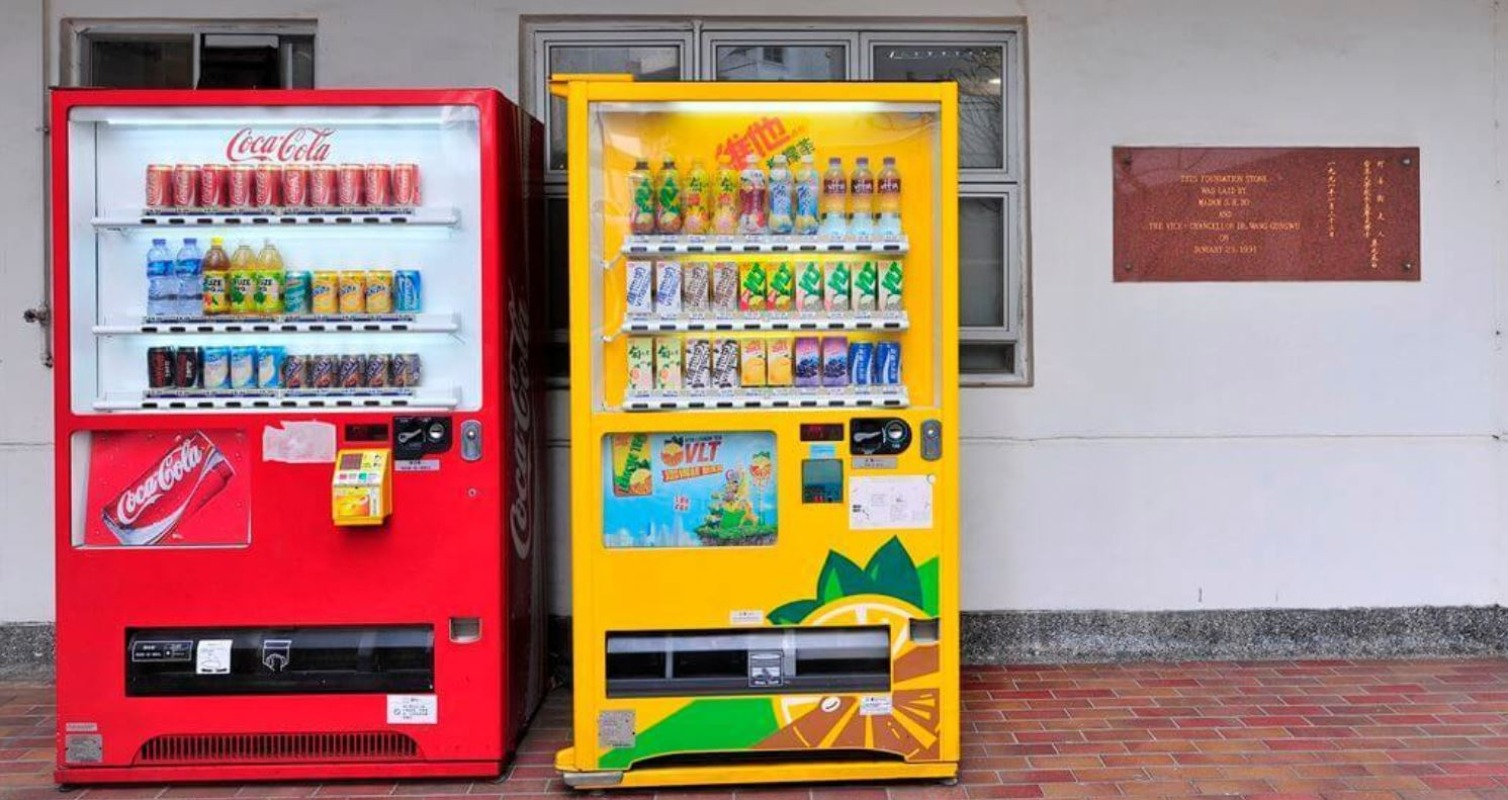
    Vending Machine in Hong Kong is known as automatic selling machine (自動售賣機 or 汽水機). Majorities of the vending machine are placed in the public, with some in the shopping centers and schools. Most are stocked with snacks and drinks, while some may have umbrellas, cosmetics, cases and accessories for mobile phones. The Hong Kong Post also has vending machine for selling stamps.

    Vending machines in Hong Kong allow the customer to pay by cash, credit cards and Octopus cards, a type of smart card.

    Why Vending machine is popular in Hong Kong?

    Due to high labor cost and limited space, vending machine have been introduced to Hong Kong. Convenient to use, cheap to set up and easy to maintain are some of the key advantages of vending machines. There is no need to hire someone to man them and they work 24/7 without any complain! Also, customers can buy ‘necessities’ without having to walk to nearby convenience store only to realise it’s ‘CLOSED’!

    The cost advantage is particularly obvious in Hong Kong. For instance, renting a vending machine slot in an MTR station often costs less than placing an ad there, according to an RTHK report.

    By installing a vending machine, you can both advertise your product and use it as a sales point. That’s why it’s such a great deal and large companies such as Coca-Cola and Vitasoy have placed many vending machines in Hong Kong as shown in the feature image.

    Vanyu-Fuji Vending Machine Co. Ltd. is the largest Vending Machine Manufacturer/Distributor in Hong Kong and have been serving Hong Kong since 1970s.

    Case Study

    The most important decision in the vending machine business is picking the location. Traffic is the paramount consideration.

    Some companies have used vending machine as part of their promotion campaign.

    For example, Colgate Hong Kong has set up vending machines in shopping malls. After inserting a HK$1 coin, the participant will receive a green apple, a toothpaste and a leaflet containing a quiz about bleeding gums.

    The HK$1 proceeds go to the Make-A-Wish Foundation and promoters armed with tablets encourage participants to answer questions in the quiz and recommending products based on how severe their gum bleeding is, as reflected by the quiz.

    Participants can also share that they have taken the quiz on Facebook to receive a free toothbrush.

    Vending Machine in Hong Kong - Colgate Green Apple Campaign
    Vending Machine in Hong Kong - Colgate Green Apple Campaign2

    Products and Solutions

  • Twitter Vending Machine

    Twitter Vending Machine

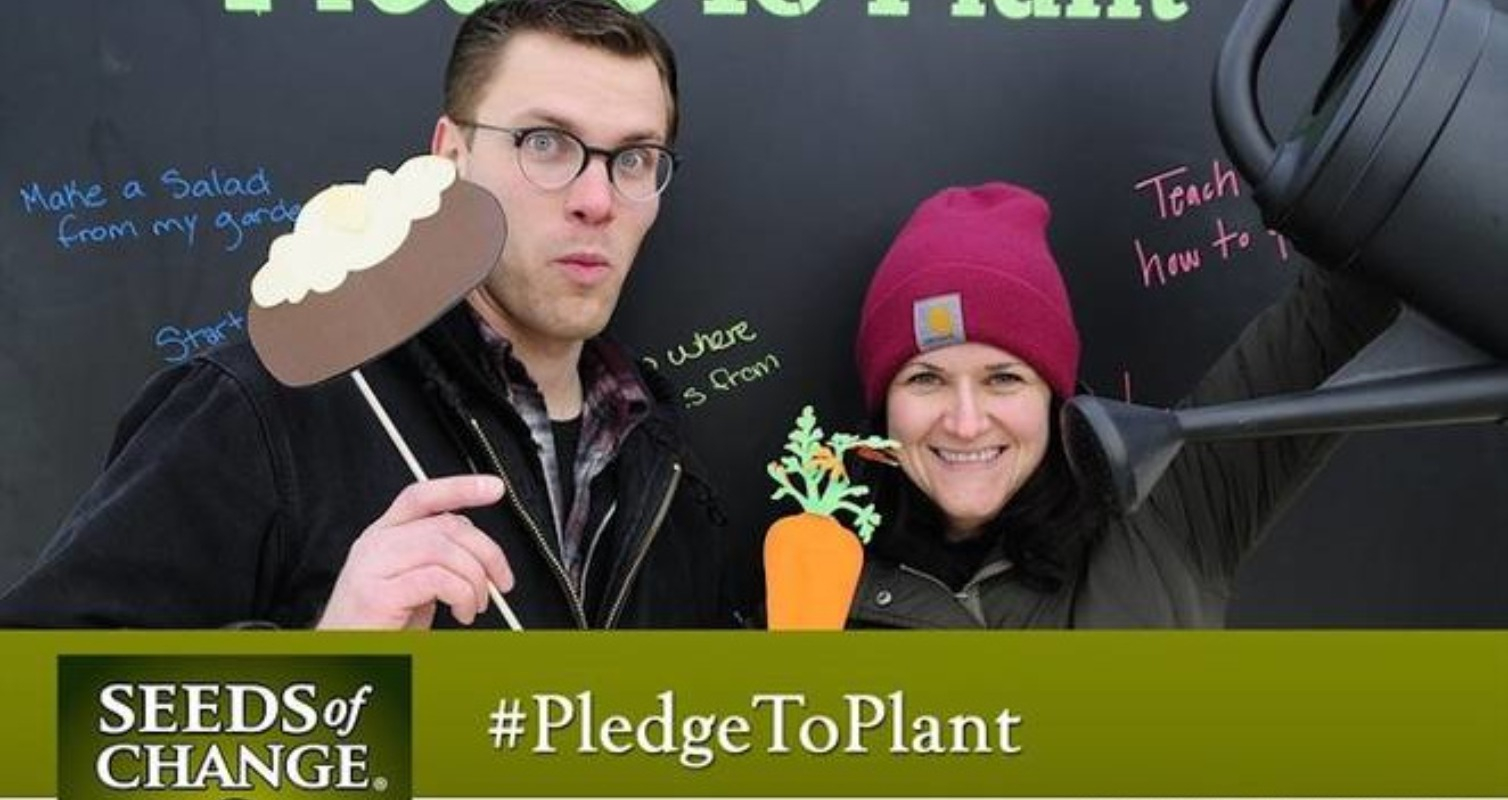
    Seeds of Change, the organic seed and food brand under Mars, Inc., launched a clever social media activation in 2014 called the #PledgeToPlant campaign. It featured a Twitter-connected vending machine designed to encourage gardening pledges and community greening, tying into the brand’s mission of sustainable food and seed-saving. This was an early example of “tweet-for-rewards” tech, blending offline events with real-time online engagement to boost brand awareness and user-generated content.

    What It Was

    • The Setup: A custom vending machine placed at farmers’ markets and expos, like the Hollywood Farmers’ Market in Los Angeles (March 16 and 23, 2014) and the FamilyFarmed expo in Chicago.
    • How It Worked: No cash required—instead, users scanned a unique code from the machine, tweeted a “Pledge to Plant” (e.g., committing to plant seeds in a community space) using #PledgeToPlant and @SeedsOfChange, and the machine detected the tweet via Twitter’s API. It then dispensed a bag of certified organic seeds (like basil, tomatoes, or herbs) plus a coupon for Seeds of Change food products.
      • If you couldn’t attend in person, tweeting #PledgeToPlant still entered you into a sweepstakes for home garden kits.
    • The Tech: Built with Wi-Fi connectivity and a touchscreen interface for Twitter login. It integrated with Twitter’s robust API (more open than other platforms at the time) to verify tweets in real-time, preventing duplicates or retweets from triggering dispenses. Similar machines were later adapted for Instagram, but this was Twitter-first.
    • Agency/Partners: Handled by experiential marketing firms like Innovative Vending Solutions, which specialized in social-activated machines. It was part of the brand’s second annual grant program, awarding community garden projects.

    Why It Rocked

    Impact: It generated buzz in marketing circles as a pioneer in tweet-vending tech, inspiring similar activations (e.g., Oreo’s flavor-tweeting Oreos at SXSW). The campaign ran alongside grants for community gardens, raising awareness and entries for funding. While exact metrics aren’t public, it contributed to the trend of social currency vending, where engagement = freebies.

    Engagement: Attendees loved the instant gratification—tweet, get seeds, plant the future. It sparked viral moments, like users sharing their pledges and hauls, amplifying reach. One expo post showed crowds buzzing around it, turning a simple market booth into a social hub.

    Brand Tie-In: Perfectly aligned with Seeds of Change’s ethos of “seeds for change,” using social media to plant literal and figurative seeds of sustainability. Pledges focused on greening urban spaces, schools, or neighborhoods, fostering real-world impact.


    Other Vending Machine Applications

  • Tote Bag Vending Machine

    Tote Bag Vending Machine

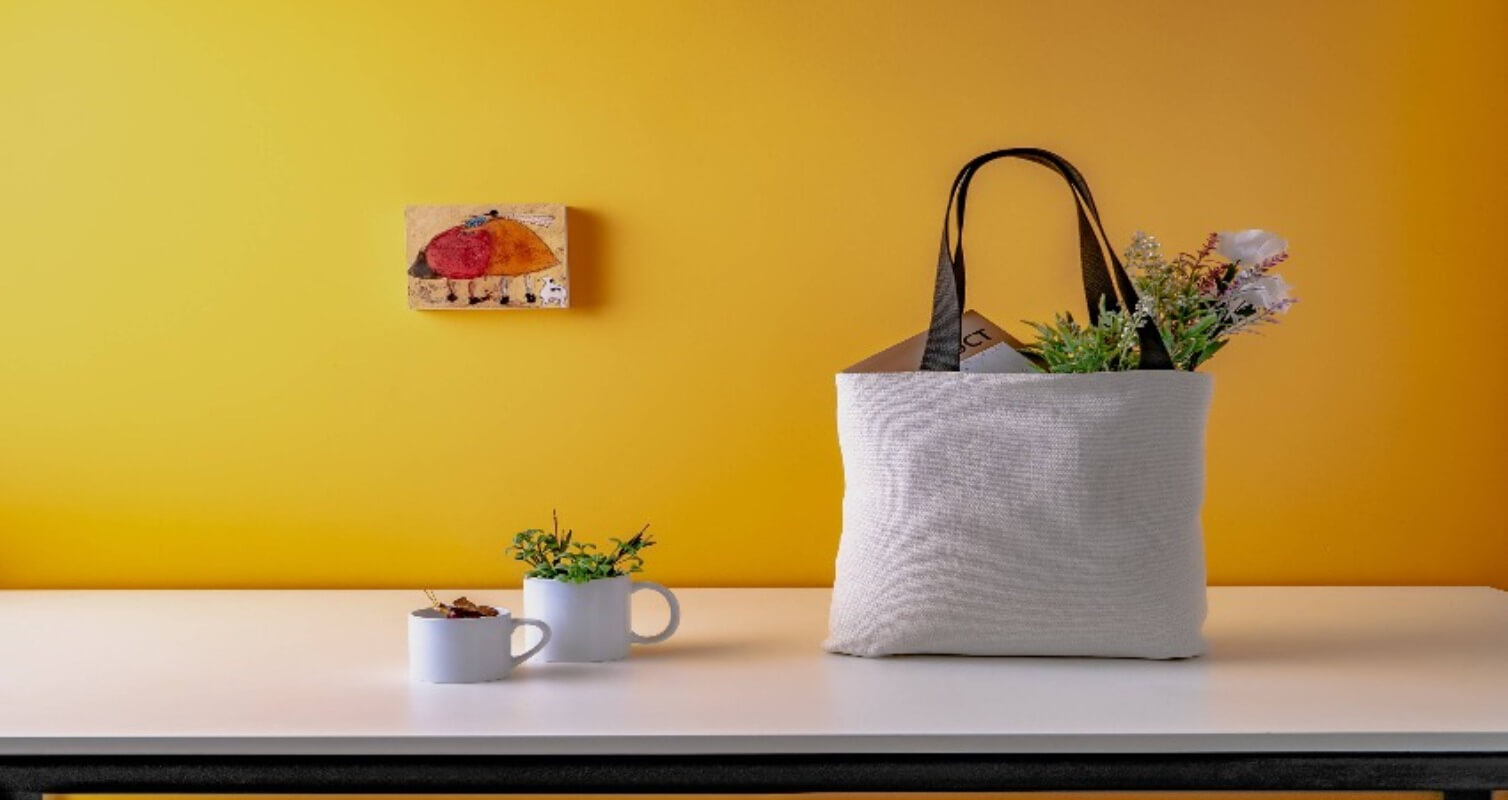
    In an era increasingly defined by environmental consciousness and on-the-go convenience, the tote bag vending machine has emerged as a clever fusion of sustainability, retail innovation, and urban design. These compact, automated kiosks dispense reusable tote bags—often made from eco-friendly materials like organic cotton, recycled polyester, or jute—at the push of a button, offering a practical alternative to single-use plastic bags.

    Origins and Purpose

    The concept of the tote bag vending machine gained traction as cities worldwide implemented bans or fees on plastic shopping bags. Retailers and municipalities sought accessible, immediate solutions for consumers who forget their reusable bags at home. Rather than reverting to disposable options, shoppers can now purchase a stylish, durable tote within seconds from a strategically placed vending machine—commonly found near grocery stores, transit hubs, farmers’ markets, or shopping districts.

    How It Works

    Tote bag vending machines operate much like traditional vending machines but with an eco-twist:

    • Product Display: Clear panels showcase a variety of designs, colors, and materials.
    • Payment Options: Accept cashless payments via credit/debit cards, mobile wallets (Apple Pay, Google Pay), or QR code scans.
    • Instant Dispensing: After payment, a compartment opens or a bag drops into a retrieval tray.
    • Smart Inventory: Many units include IoT sensors that alert operators when stock is low or maintenance is needed.

    Sustainability Impact

    Each reusable tote bag distributed through these machines has the potential to replace hundreds—if not thousands—of single-use plastic bags over its lifetime. Many operators partner with environmentally certified suppliers, ensuring bags meet standards for low-impact production and ethical labor practices. Additionally, a portion of proceeds often supports local environmental initiatives or community clean-up efforts.

    Design and Branding Opportunities

    Beyond utility, tote bag vending machines serve as mini billboards and brand activation tools. Retailers, artists, and nonprofits can collaborate to feature limited-edition designs—promoting everything from fashion lines to climate awareness campaigns. In this way, the machines transform a routine transaction into an expression of identity and values.

    Real-World Examples

    • Baggu + CIRQ: In select U.S. cities, eco-friendly brand Baggu installed vending machines offering their signature nylon totes made from recycled materials.
    • Totters (UK): A startup that placed solar-powered tote vending units in London supermarkets, with bags printed by local artists.
    • “Bag Share” Kiosks in Japan: Integrated into train stations, allowing commuters to rent or buy totes for impromptu shopping trips.

    Future Outlook

    As smart city infrastructure expands and circular economy principles gain momentum, tote bag vending machines are poised to become standard fixtures in sustainable urban ecosystems. Future iterations may include return-and-reuse programs, biodegradable bag options, or even AI-driven style recommendations based on user preferences.

    In essence, the tote bag vending machine is more than a clever gadget—it’s a symbol of how small, thoughtful innovations can collectively drive significant environmental change while meeting the demands of modern, mobile lifestyles.


    Other Vending Machine Applications

  • Egg Vending Machine

    Egg Vending Machine

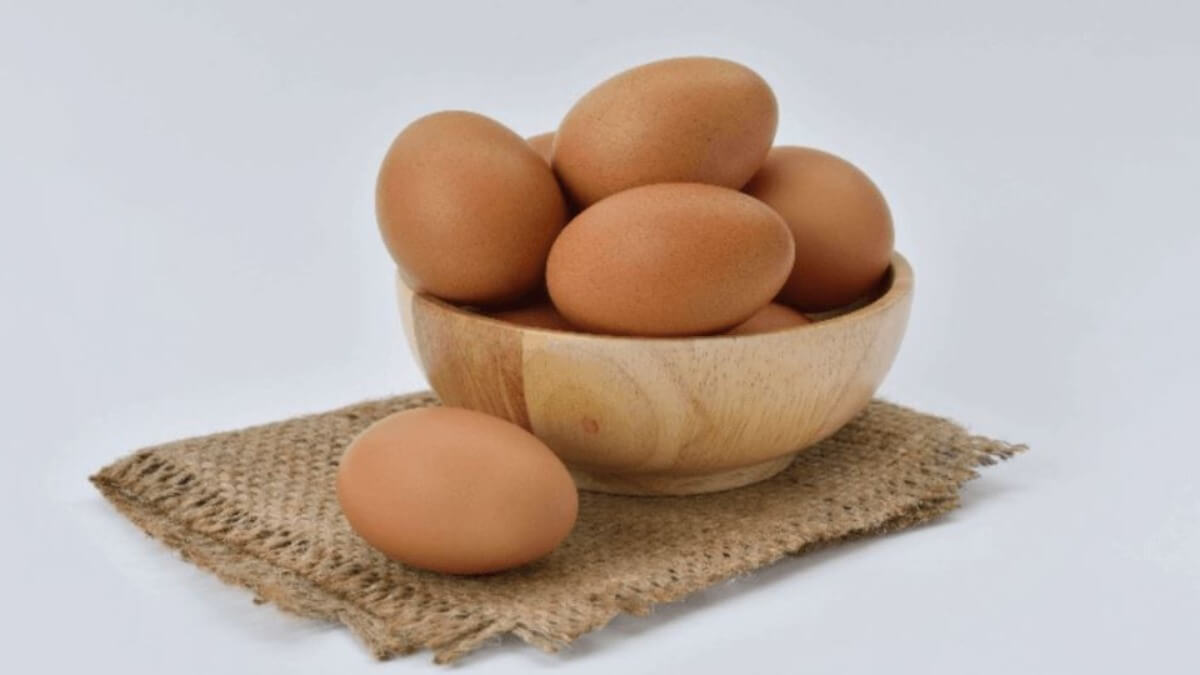
    Producers who rely on honesty boxes for farm gate sales are all too often left out of pocket when would-be customers walk off with their eggs or other produce without paying. It just doesn’t work.

    The machine offered farmers some security against opportunist thieves who took advantage of honesty boxes. It can be tailored to suit any size of operation and it can vend anything from eggs to vegetables and potatoes.

    Egg Vending Machine

    In the US, Glaum Egg Ranch in Santa Cruz County, California was one of the earliest adopters, dispensing eggs with a side of entertainment. When customers purchase eggs, they’re also treated to an animatronic show complete with singing and dancing chickens.

    New York decided to implement a vending machine program that was somewhere between practical and publicity stunt.

    Machines at rest stops are now selling items ranging from Red Jacket Orchard juices from Geneva, New York to Finger Lakes Fresh apple slices from Groton and Sweet Sam’s cookies from the Bronx.

    New York has installed 10 machines throughout the state and hopes to install more if they prove popular. This marks the first time local-fare vending machines have been sponsored by the public sector.

    Vending machines have a number of advantages over brick-and-mortar stores or even farmers markets. There’s no need to pay an employee to run the register and, unlike a weekly market, the machines can run 24/7 in many locations at once.

    The vending machines also boost farm income and offer a bit of brand recognition. Visitors who see a farm’s name in a vending machine might be moved to take part in a farm tour or seek out their products elsewhere.


    Other Vending Machine Applications

  • Vending Machine Experience

    Vending Machine Experience

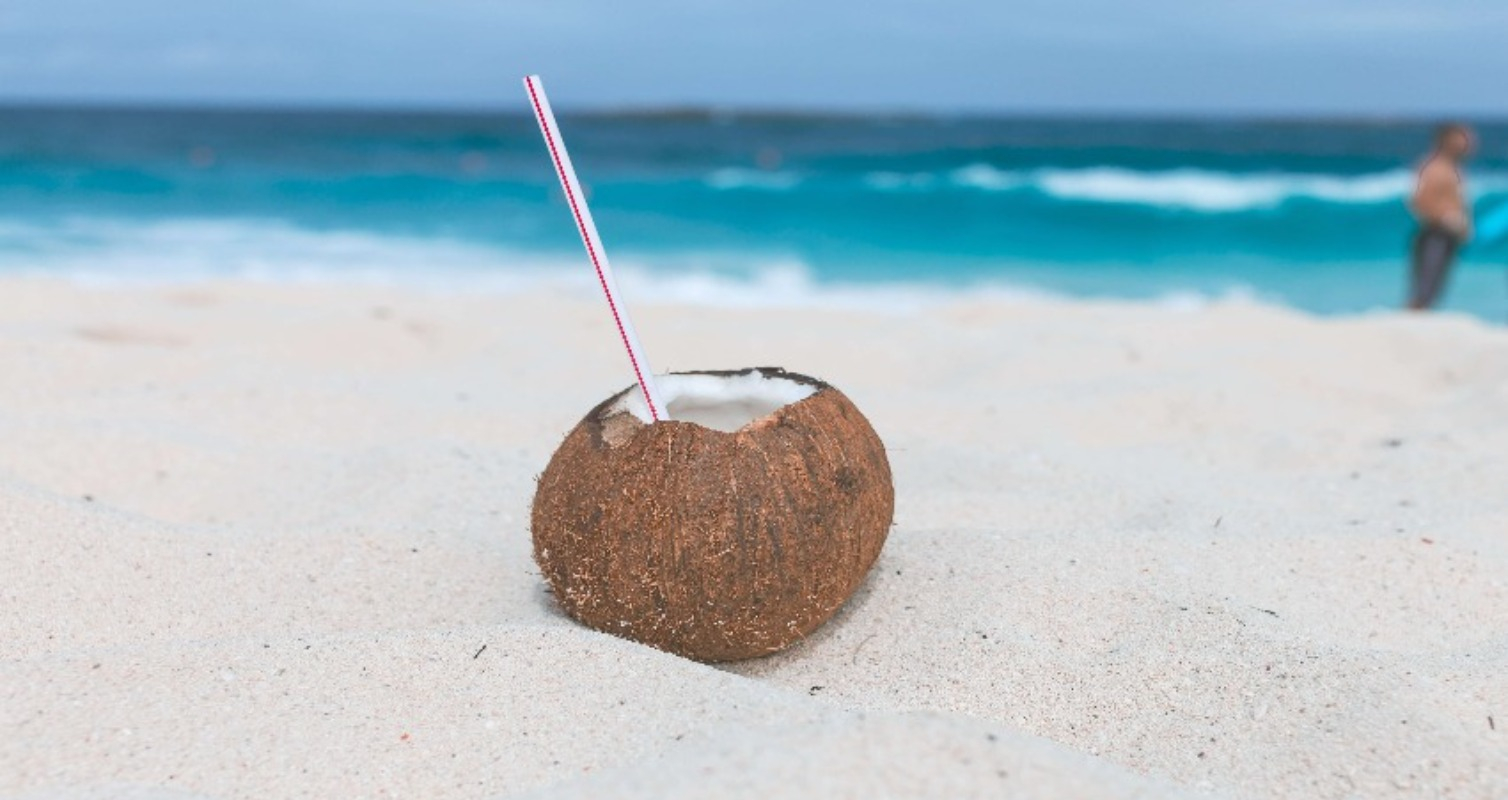
    In 2014, ZICO Premium Coconut Water (a brand under The Coca-Cola Company at the time) launched its “Crack Life Open” national marketing campaign, which was refreshed and expanded in 2015.

    The campaign’s core message encouraged consumers to “crack open” their hearts and minds—like cracking open a fresh coconut—to embrace positivity, hydration, and holistic well-being.

    It positioned ZICO as more than a sports drink, evolving it into an “anytime” beverage for emotional and physical flourishing, with the tagline emphasizing that “life is better when our hearts and minds are open.”

    ZICO Secret Garden

    A standout experiential element was the 2015 “ZICO Secret Garden” pop-up in downtown Manhattan, disguised as a standard vending machine. Created in collaboration with Refinery29, it launched on June 19, 2015, as a surprise for NYC tastemakers and passersby.

    • Concept and Execution: Users approached what appeared to be a regular ZICO vending machine offering free coconut water. Instead of dispensing a bottle, pressing the button revealed a hidden door leading to a lush, insta-worthy garden lounge. The space featured:
      • Custom ZICO cocktails and a “ZICO Cloud Bar.”
      • Live entertainment: DJs Brendan Fallis and CHAPMAN, a string quartet, and ballet dancers.
      • Floral-themed decor echoing the campaign’s artistic visuals.
      The activation embodied the “Crack Life Open” ethos: “Appearances can be deceiving—it’s what’s on the inside that counts,” surprising participants and encouraging them to “open up” to new experiences.
    • Target and Buzz: Aimed at influencers and urban consumers, it generated social media shares through its novelty. Videos captured reactions of delight and surprise as people “walked in” expecting a simple drink but discovering a full event space.

    The campaign helped reposition ZICO in a crowded coconut water market, boosting brand awareness through Alba’s star power and viral experiential stunts. It ran through summer 2015, aligning with peak hydration season, and contributed to ZICO’s growth as a lifestyle brand. While specific metrics aren’t public, the activations like the Secret Garden amplified the “Flourish from the Inside Out” narrative, fostering emotional connections beyond product sales.

    Vending Machine Experience from ZICO
    Vending Machine Experience from ZICO

    Other Vending Machine Applications

  • Luxury Goods Vending Machine

    Luxury Goods Vending Machine

    The Mondrian South Beach hotel has a unique luxury goods vending machine that sells everything from toothbrushes to a Bentley Arnage. The fancy retail machine stocks a list of over the top items including golden handcuffs, land and condos.

    For anything that can’t fit inside, customers trade in a voucher at the front desk to receive their goods. Though the ultra high-end nature of this machine is a bit questionable and gimmicky, the concept behind it is interesting.

    Luxury goods vending machines represent an innovative and intriguing intersection of high-end retail and automated convenience. These machines offer premium products that one might not expect to find in a typical vending setup, ranging from electronics and jewelry to cosmetics and designer accessories. Here are some interesting points about luxury good vending machines:

    1. Boutique Experience: Brands use these machines to create a unique shopping experience that combines the exclusivity of luxury with the convenience of vending. They are often found in high-traffic areas like airports, upscale malls, and hotels, targeting travelers or individuals looking for quick access to premium items.
    2. Cutting-Edge Technology: These vending machines incorporate advanced technologies such as touch screens, secure payment methods including credit cards and mobile payments, and sometimes even facial recognition for personalized experiences. Some machines feature transparent OLED displays that showcase products attractively while providing interactive information.
    3. Product Range: The range of products available can be quite diverse. Examples include Apple products (iPhones, iPads), luxury watches from brands like Rolex, high-end cosmetics from companies such as Chanel or Dior, and even fine jewelry. This variety caters to impulse buyers and those seeking immediate access to luxury items without visiting a traditional store.
    4. Marketing and Branding: Luxury good vending machines serve as a form of experiential marketing. They attract attention through their novelty and provide brands with a platform to showcase their products in a highly visible way. It’s a strategy that appeals particularly to younger, affluent consumers who appreciate both luxury and convenience.
    5. Security Features: Given the valuable nature of the goods sold, these machines come equipped with robust security measures. This includes reinforced glass, anti-theft mechanisms, and surveillance systems to prevent theft and ensure safe transactions.

    One notable example is the Bulgari vending machine, which offers a selection of its iconic products, allowing customers to purchase luxury items anytime. Another is Best Buy’s vending machines, which sell electronics in convenient locations like airports.

    Luxury good vending machines challenge conventional retail models by making premium products more accessible and offering a novel shopping experience that merges technology with top-tier merchandise.


    Other Vending Machine Applications

  • Screaming Vending Machine

    Screaming Vending Machine

    Farnham Ale & Lager, a Quebec-based microbrewery known for its bitter IPAs and lagers, launched a memorable experiential marketing campaign in 2015 called the “Scream Machine.” This stunt perfectly tied into the brand’s theme of “bitterness,” turning frustration into a fun, interactive way to score free beer. Here’s the breakdown:

    What It Was

    • The Setup: At the Festibière de Québec beer festival, the brewery installed a custom vending machine stocked with cans of their beers.
    • How It Worked: No coins or cards needed—instead, users screamed into a sensor-equipped hole on the machine to “pay.” A sign on the front read something like: “Vent your frustrations… and your bitterness will be replaced with good.” The louder and more intense the scream (measured by acoustic sensors for loudness and “roughness”), the more bitter the beer dispensed as a reward.
      • Quiet scream? You might get a milder lager.
      • Primal yell? Score a hoppy, extra-bitter IPA.
    • The Tech: Engineered with sound sensors to detect decibel levels and frequency variations (screams spike at 30–150 Hz, way above normal speech), it projected the screams outward to draw crowds and amplify the chaos.
    • Agency Behind It: Created by the Canadian agency Lg2, with production from Nova Movie and sound design by Studio Expression. It was an ambient/outdoor campaign that went viral through festival buzz and social shares.

    Why It Rocked

    Impact: The campaign earned accolades in creative circles (e.g., featured on Ads of the World) and inspired similar scream-based activations worldwide, like a 2025 San Miguel stunt in the Philippines. It’s a prime example of how experiential marketing turns a simple vending machine into an emotional, shareable moment.

    Engagement: Festival-goers from young adults to grandparents unleashed epic screams, creating a spectacle that pulled in bystanders. Videos show people howling like banshees, laughing hysterically, and high-fiving over their “bitter” prizes.

    Brand Tie-In: It cleverly played on the double meaning of “bitter”—emotional frustration swapped for the brewery’s signature bitter brews. As one description put it: “I scream, you scream, we all scream for beer.”

    Put on some headphones before you watch It!


    Other Vending Machine Applications

  • Caviar Vending Machine

    Caviar Vending Machine

    The business, Beverly Hills Caviar, is owned by husband and wife team Kelly Stern and Brian Scheiner, who both come from long lines of Eastern European “caviar families.”

    The idea of selling caviar from a vending machine may seem offbeat, but Stern says it’s a business model that works. While the machines definitely attract a curious audience, there are also caviar aficionados, including chefs, who come with their credit cards in hand.

    “We actually patented the technology because it was so time-intensive and we needed so many engineers just to get it done right,” says Stern.

    The machine has security measures with three cameras as the daily inventory adds up to around $50,000. Caviar emerges from the vending machine in a specially designed insulated box, which provides a window of about three hours to get it back in a fridge or onto your plate.

    By the time you get home it’s usually just perfect and you can eat it, and it will be the tastiest thing you ever had.

    Stern

    Other Vending Machine Applications